

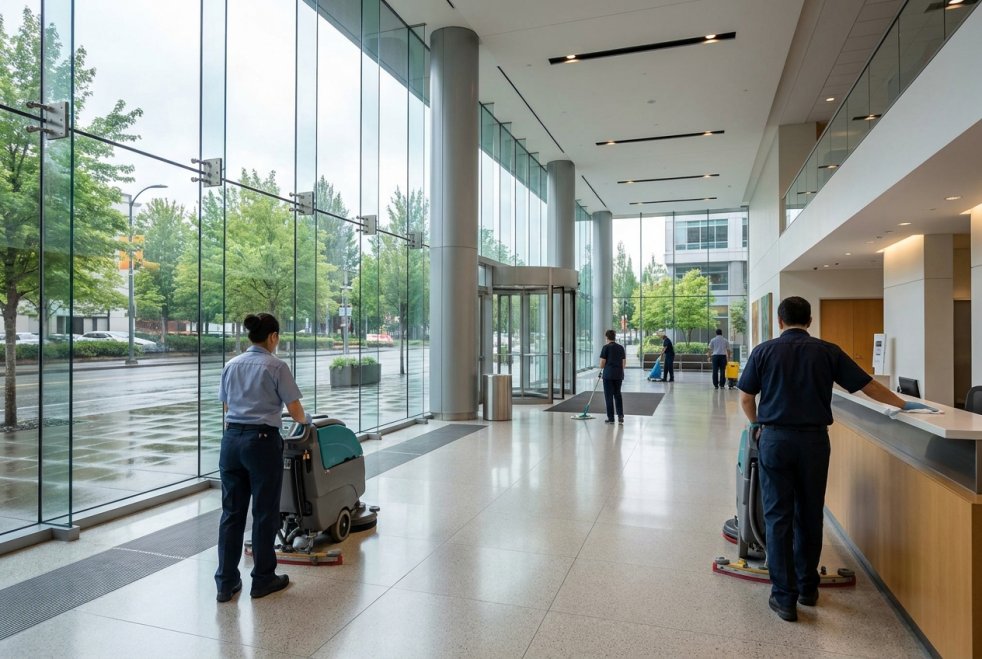
Managing High-Traffic Facilities During Summer Months in Seattle
Seattle summers are shorter than most people expect, which means businesses pack a lot of activity into a narrow window. From June through September, foot traffic spikes, events fill up calendars, and facilities take a beating that the rest of the year simply does not replicate.
Without a commercial cleaning program adjusted for that seasonal surge, the wear accumulates fast, and the costs follow shortly after.
Why Summer Creates Unique Facility Pressure in Seattle
Seattle's mild, dry summers draw people outdoors and into commercial spaces at a rate that winter months do not. Retail centers, office buildings, medical facilities, gyms, and hospitality venues all see measurable increases in occupancy and use.
- Tourism peaks from July through August, pushing foot traffic higher in downtown Seattle, Capitol Hill, Pike Place Market corridors, and waterfront-adjacent properties
- Longer daylight hours extend operating windows, meaning facilities stay occupied later and cleaning crews have less time to work between shifts
- Outdoor events and festivals drive spillover traffic into nearby commercial buildings, lobbies, and restrooms
- Dry, fine particulate from Seattle's smoke season (typically late July through September) settles on surfaces and circulates through HVAC systems more aggressively than winter moisture-bound debris
These are not minor fluctuations. They represent a genuine shift in how hard your facility is working and how quickly surfaces, floors, and restrooms degrade without adjusted maintenance.
The Causes Behind Accelerated Summer Wear
Understanding what drives summer facility deterioration helps you target the right areas before damage sets in.
- Increased foot traffic grinds fine grit and dry soil into carpet fibers and hard floor finishes at a faster rate than during low-season months
- Higher temperatures concentrate odors in restrooms, break rooms, and any space with limited ventilation or aging HVAC
- Outdoor air quality events, including wildfire smoke from Eastern Washington and Oregon, introduce fine particulate that settles on desks, vents, and soft surfaces throughout the building
- Beverage and food consumption increases in lobbies, common areas, and outdoor-adjacent spaces, raising the frequency of spills and sticky residue on hard floors
- Reduced rain means entry mats stop catching as much debris, but dry dust and pollen tracked in from Seattle's parks and green spaces replace it
Warning Signs Your Current Program Is Not Keeping Up
Summer cleaning problems rarely announce themselves all at once. They build gradually until they become visible to tenants, customers, or inspectors.
- Carpet lanes in lobbies, corridors, and elevator bays showing visible matting or discoloration that did not appear in the spring
- Restrooms that smell stale or feel unclean within hours of a morning service, rather than holding through the day
- Hard floors are losing their finish or showing scuff buildup in high-traffic zones near entries and service counters
- Dust accumulation on horizontal surfaces, vents, and window ledges that returns within a day or two of cleaning
- Complaints from tenants, staff, or customers about appearance or odor that were not present earlier in the year
Each of these is a signal that your cleaning frequency or scope has not scaled to match the summer demand on your facility.
What High-Traffic Facility Management Looks Like in Practice
Adjusting for summer is not simply cleaning more often. It requires a targeted approach that matches service intensity to the actual conditions in each zone of your building.
- Increase restroom service frequency during peak occupancy hours rather than relying on a single end-of-day clean
- Add interim floor care to high-traffic hard surface zones, including dust mopping and spot mopping, between scheduled deep cleans
- Rotate and service entry mats more frequently to manage dry pollen, dust, and debris tracked in during Seattle's dry season
- Schedule carpet extraction in heavy-use zones before summer peaks, not after visible damage has set in
- Address HVAC vent and return cleaning before the smoke season arrives in late July to reduce particulate recirculation through the building
- Assign spot-check walkthroughs during the day in lobbies, break rooms, and common areas rather than waiting for complaints
A well-managed summer program is proactive. Reactive cleaning during peak season always costs more and delivers worse results.
Seattle-Specific Factors Worth Planning Around
Managing a facility in Seattle requires accounting for regional conditions that generic cleaning schedules do not address.
- Wildfire smoke season typically runs from late July through September and can significantly degrade indoor air quality even in well-sealed buildings
- Seattle's summer festivals and outdoor markets, including events near Seattle Center, the waterfront, and neighborhood business districts, create concentrated foot traffic surges in nearby commercial properties
- The transition from Seattle's wet spring to dry summer happens quickly, and cleaning programs built for rainy-season soiling need to shift focus from moisture management to dust and particulate control
- Tourism-heavy areas see restroom and common area use that can triple compared to off-season levels, requiring a fundamentally different service schedule
What to Do Next
System4 of Washington works with Seattle-area businesses and facility managers to build cleaning programs that adjust to seasonal demand, including the concentrated pressure that summer months bring to high-traffic commercial spaces.
- Walk your facility and identify the zones that show the most wear or receive the most traffic during the summer months
- Review your current cleaning schedule and ask whether frequency and scope reflect summer occupancy levels or off-season baselines
- Consider whether your restroom service, floor care, and entry management programs are built for peak load or average load
- Think about whether wildfire smoke season is factored into your HVAC and surface cleaning plan for late summer
Call (253) 215-8899 today to schedule a facility walkthrough and find out how a summer-adjusted commercial cleaning program can protect your Seattle property through the busiest months of the year.


