

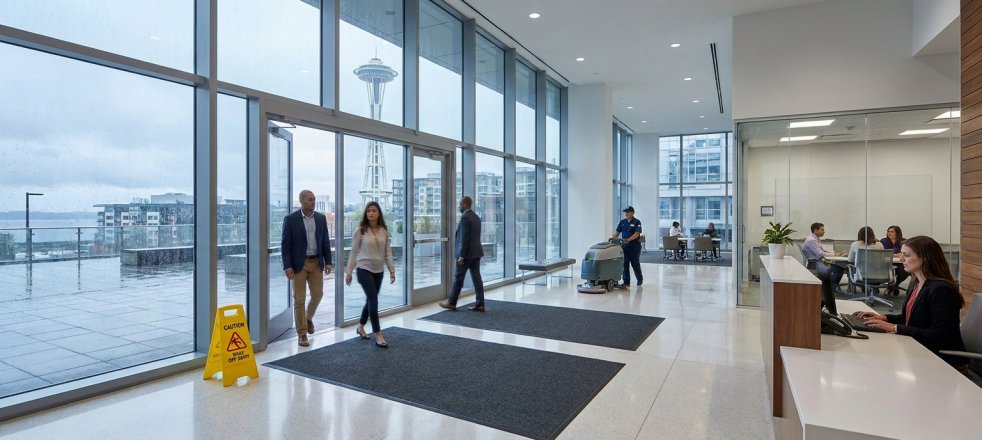
How Facility Management Simplifies Operations for Busy Workplaces in Seattle
Running a busy workplace in Seattle means juggling staffing, client demands, deadlines, and a building that needs constant attention. Facility maintenance is one of those responsibilities that quietly consumes time and resources until it becomes a visible problem.
Professional facility management takes that burden off your plate. It replaces a scattered, reactive approach with a structured program that keeps your building running smoothly every day.
What Facility Management Actually Does for Your Operation
Facility management is not just cleaning. It is the ongoing coordination of every task that keeps your workplace safe, presentable, and functional for employees and clients alike.
- Scheduled cleaning of offices, restrooms, break rooms, lobbies, and common areas
- Floor care including vacuuming, mopping, and periodic deep cleaning of hard and carpeted surfaces
- Entryway and mat service to manage the mud, moisture, and debris that Seattle's rainy season brings from October through May
- Restroom sanitation and supply restocking on a consistent schedule
- Seasonal adjustments for high-traffic periods and weather-driven demands specific to the South Puget Sound region
When these tasks are handled by a managed provider, your team stops absorbing them. That shift alone has measurable value on your day-to-day operations.
How Seattle's Climate Creates Ongoing Facility Demands
Seattle averages around 38 inches of rain annually, and the wet season stretches well into spring. Those conditions place constant pressure on floors, entryways, and indoor air quality that dry-climate businesses never face.
- Wet entryways track moisture, mud, and grit onto floors throughout the rainy season, accelerating wear and creating slip hazards
- High indoor humidity encourages mold and mildew growth in restrooms, carpeted areas, and near HVAC vents
- Spring pollen from alder, big-leaf maple, and Douglas fir settles on surfaces and filters into buildings from March through June
- Winter foot traffic grinds debris into flooring without consistent care, leading to surface damage that routine cleaning cannot reverse
A professional facility management program accounts for these seasonal shifts before they become visible problems. A reactive, understaffed approach typically responds after the damage is already done.
Warning Signs Your Current Approach Is Falling Behind
Facility problems do not stay the same size when they go unaddressed. They compound. These are the signs that your current setup is not keeping pace with your workplace demands.
- Entryways that stay wet or grimy during Seattle's rainy months without being addressed between service visits
- Restrooms that feel neglected by midday or show buildup in grout lines and corners
- Employees or clients commenting on odors or visible dirt
- Flooring that shows wear or discoloration that routine cleaning does not resolve
- Your staff spending time managing cleaning tasks instead of their actual job responsibilities
- Inconsistent results from week to week with no clear accountability
Each of these is a real cost. Some show up as client impressions, some as employee morale, and some as deferred maintenance that eventually becomes a capital expense.
The Operational Benefits of a Managed Cleaning Program
The value of professional facility management goes beyond a cleaner building. It simplifies the way your entire operation runs.
- One point of contact handles scheduling, staffing, and quality control so you are not coordinating multiple vendors
- Consistent service standards mean your facility looks the same on Monday morning as it does on Friday afternoon
- Proactive seasonal adjustments keep entryways, floors, and restrooms ahead of Seattle's weather demands
- Predictable monthly costs replace unpredictable supply purchases, staff overtime, and reactive cleanup expenses
- Documented service logs give you accountability and a record you can reference if issues arise
For busy workplaces, consistency and predictability matter as much as cleanliness. A managed program delivers all three.
Who Benefits Most From Professional Facility Management
Some workplaces feel the impact of poor facility management more immediately than others. These are the environments where a structured program makes the biggest difference.
- Medical and dental offices where cleanliness directly affects patient safety and compliance
- Multi-tenant office buildings where consistent standards across shared spaces are essential
- Retail and hospitality businesses where first impressions drive repeat visits
- Schools and childcare facilities that require rigorous sanitation on a daily basis
- Industrial and warehouse facilities where floor care and safety standards are tied to operations
Any workplace that relies on a clean, safe environment to serve clients or support employees has something to gain from a professional program.
What to Do Next
If your facility maintenance feels reactive, inconsistent, or quietly consuming your team's time, it is worth taking an honest look at what you are actually managing.
- Walk through your facility as a first-time visitor and note what stands out
- Estimate how many hours per week your staff spends on cleaning or cleaning-related coordination
- Identify the areas that fall behind most often, such as restrooms, entryways, and break rooms
- Consider whether your current approach is prepared for Seattle's wet winters, spring pollen season, and persistent moisture conditions
System4 of Washington provides managed commercial cleaning programs built around the real demands of Seattle and the greater South Puget Sound area. The programs are designed to keep your facility consistent, your team focused, and your costs predictable.
Call (253) 215-8899 today to schedule a walkthrough and find out how a professional facility management program can simplify operations for your workplace.


